
In Australia, a full body checkup isn't one universal test. It's a preventive health assessment designed to identify risk factors, review health history and support early intervention, with 576,139 Medicare Benefits Schedule health assessments provided in 2008–09.
The popular advice is to buy the biggest package of scans and blood tests available. That sounds thorough, but it can be clinically unhelpful. A useful checkup isn't defined by how many tests appear on an invoice. It's defined by whether the right risks are assessed, whether abnormal findings are interpreted properly and whether the patient receives the follow-up they need.
For patients, that means asking what a proposed assessment is intended to detect and what happens if a result is outside the expected range. For Australian general practices, medical centres and specialist outpatient clinics, it means building a preventive-care process that connects consultation, documentation, recalls, communication and referral completion.
Table of Contents
- Why a Full Body Checkup Is Not One Universal Test
- What a Full Body Checkup Includes in Australian Primary Care
- When to Recommend and Repeat Preventive Health Assessments
- How Patients Should Prepare for a Full Body Checkup
- Common Findings, Risk Stratification, and When to Refer
- How Clinics Can Streamline Booking, Recall, and Follow-Up
Why a Full Body Checkup Is Not One Universal Test
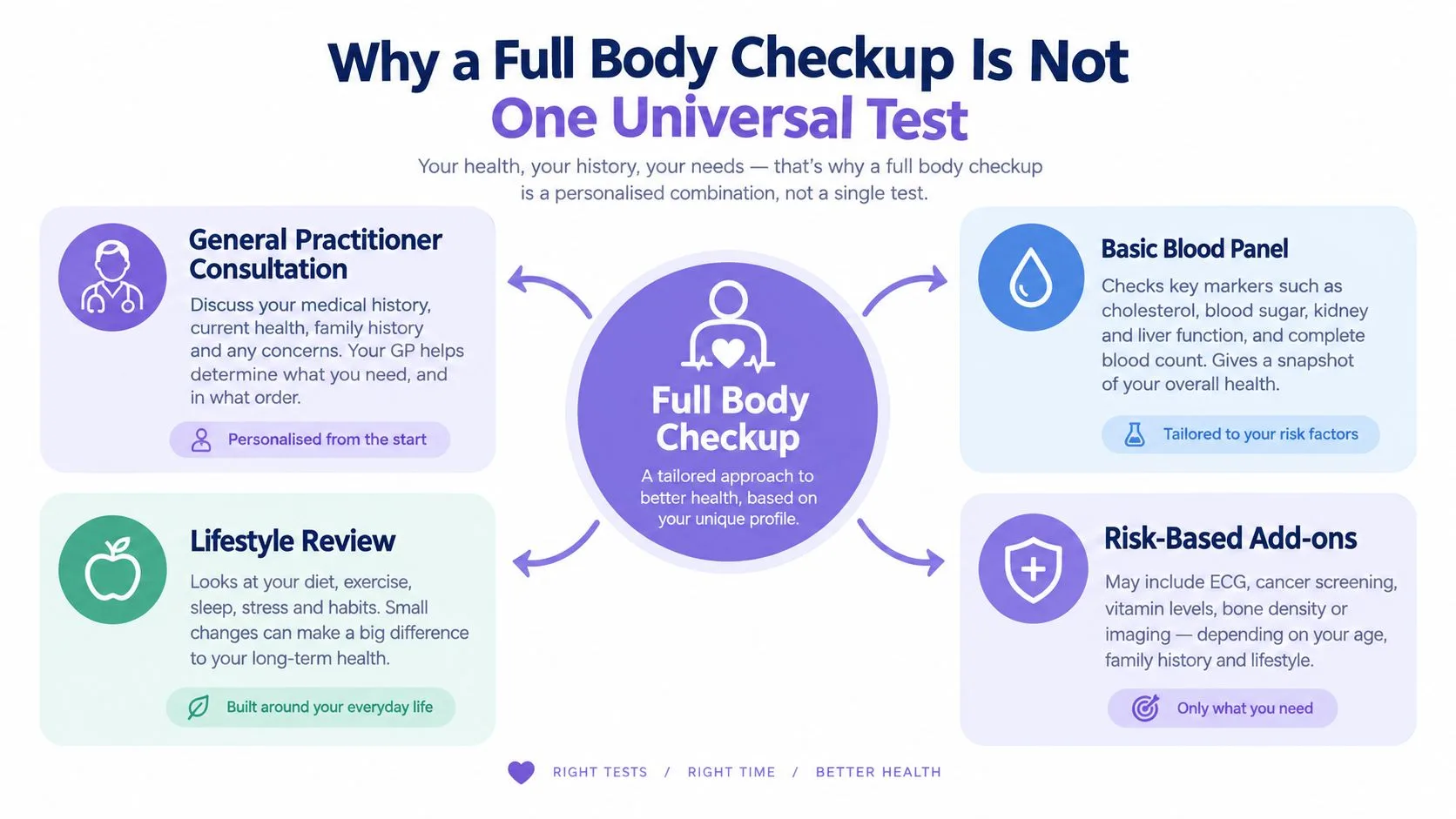
A full body checkup is often presented as a single package: extensive bloodwork, imaging, heart tests and cancer markers bundled into one appointment. Australian preventive care takes a different approach. Medicare-subsidised health assessments have historically been directed towards particular age groups, chronic-disease risks and population needs, rather than delivered as one identical test battery for everyone. The Australian Institute of Health and Welfare's historical data shows the scale of this targeted model, including more than 40,000 Healthy Kids Checks, more than 18,000 Aboriginal and Torres Strait Islander Adult Health Checks, and almost 310,000 Older Persons Health Assessments in 2008–09 (AIHW health assessment data).
That distinction matters because a scan or laboratory result only becomes useful when it answers a sensible clinical question. A patient with symptoms needs diagnostic assessment. An asymptomatic patient needs prevention based on age, sex, family history, lifestyle, previous results and relevant conditions. Those are different pathways, even if a commercial package uses the same phrase, “full body checkup”.
The consultation comes before the test list
A clinically sound assessment starts with history and conversation. The clinician needs to understand current symptoms, prescribed medicines, supplements, smoking, alcohol, activity, diet, sleep, mental health, family history and previous abnormal results. The physical examination then focuses on what the history and risk profile justify.
This doesn't mean every patient receives fewer checks. It means the checks are selected for a reason. A blood pressure measurement may lead to repeat measurements or a broader cardiovascular assessment. A medication review may identify an interaction or an adherence problem. A family history may change the appropriate screening conversation.
Practical rule: A test without a follow-up pathway is an administrative event, not a complete preventive service.
The same principle applies to clinics. A practice that advertises a large package but has no reliable system for results communication, recalls or referral tracking has created the appearance of thoroughness without the full safety net. The better model is a structured assessment that records risk factors, documents decisions and assigns the next action before the patient leaves.
What a Full Body Checkup Includes in Australian Primary Care
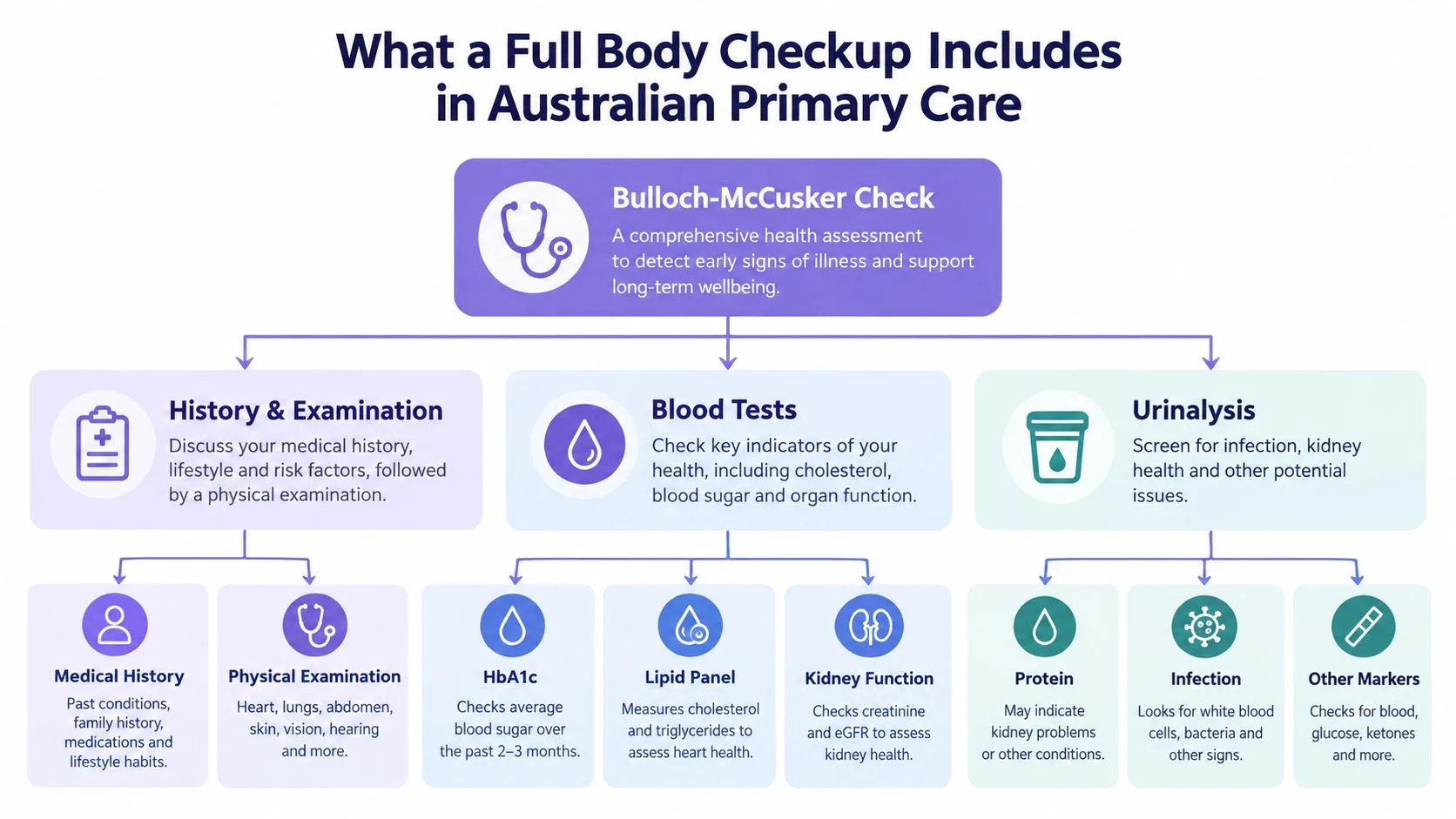
A full body checkup in general practice is a set of targeted decisions made in one appointment, not a generic stack of tests. In Australian primary care, the useful version combines baseline observations, focused screening, and a follow-up plan that someone in the clinic actually owns.
Start with the patient's baseline
The appointment usually begins with a practical review of symptoms, past diagnoses, current medicines, allergies, prior procedures, family history and day-to-day risk factors. Basic observations such as blood pressure, pulse, weight and body mass index establish the immediate clinical picture. Depending on the person in front of you, the consultation may also pick up mental health concerns, poor sleep, alcohol or drug use, occupational exposures, or simple access problems such as cost, transport, or low health literacy.
What happens next should be selected, not bundled. A cardiovascular risk review may be appropriate. An ECG, blood test, or other investigation should follow from the history and examination rather than from a package label. Patients who need pathology should be told what each test is for, whether preparation is needed, and how results will be communicated. For patients who want more context on how pathology fits into a GP review, this guide to blood testing and clinical assessment is useful background, but it does not replace clinical advice.
Connect screening to action
Age-based and eligibility-based screening also sits inside the same visit, but only if the practice links it to recall and follow-up. The National Bowel Cancer Screening Program offers a free test for Australians aged 45–74 (Australian bowel screening information). A proper checkup does more than mention the program. It confirms eligibility, checks whether the kit was received and completed, records the result, and assigns a next step if the result needs attention.
For people over 50, RACGP guidance supports opportunistic atrial-fibrillation screening by pulse palpation, with a full ECG or handheld ECG rhythm strip if the pulse is irregular (RACGP cardiovascular prevention guidance). That is a sensible primary care workflow. An irregular pulse prompts confirmation. A normal pulse does not create a reason for broad cardiac imaging.
The appointment should finish with a documented plan. That may include lifestyle support, medication changes, repeat observations, a pathology request, a screening referral, or a booked review. If no one records the next action and timeframe, the checkup becomes a conversation rather than preventive care.
When to Recommend and Repeat Preventive Health Assessments
A useful preventive checkup runs on timing, risk and follow-up. It does not run on a fixed yearly bundle. In Australian general practice, the right question is not whether someone should have “everything checked” today. The question is which assessments are indicated now, which can wait, and what needs to happen after the result is back.
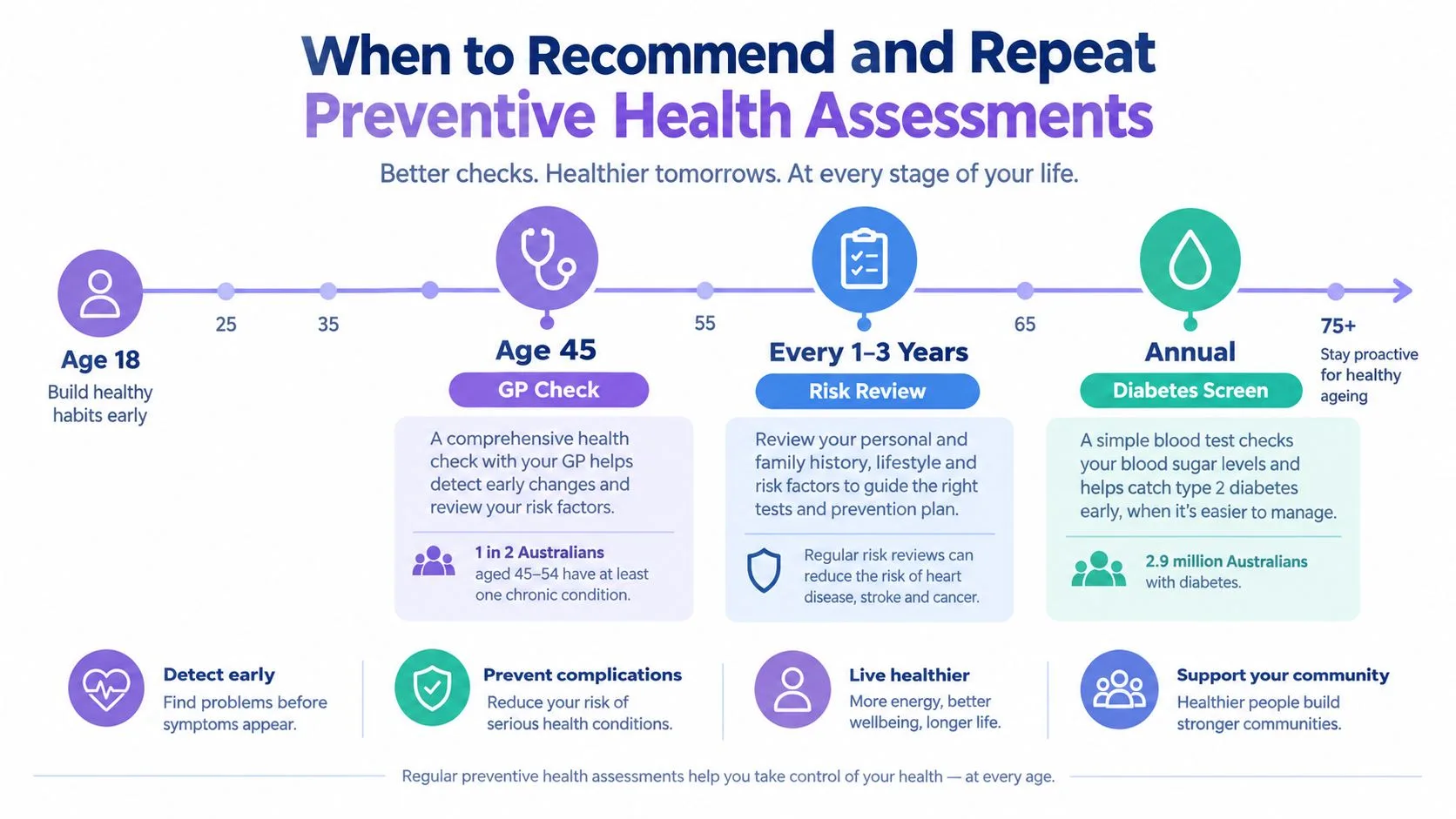
For adults aged 45–79 without known cardiovascular disease, RACGP guidance recommends estimating five-year cardiovascular risk with the Australian CVD Risk Calculator. The calculation uses age, sex, blood pressure, cholesterol ratio, diabetes and smoking status. It categorises risk as low, below 5%, intermediate, from 5% to below 10%, or high, 10% or more (RACGP CVD risk guidance). That matters because repeat testing should match risk category, treatment decisions and changes in clinical status, not the clinic's preferred package.
For Aboriginal and Torres Strait Islander people, cardiovascular risk assessment starts at 35 years. Practices need to record Aboriginal and Torres Strait Islander status accurately and keep smoking, diabetes, blood pressure, lipid results, kidney-related factors and family history up to date. The score guides management. It is not a diagnosis on its own.
Use intervals instead of blanket packages
Australian primary care uses intervals as a starting point, then adjusts them when history, symptoms or earlier results justify a shorter review cycle.
| Preventive activity | General guidance |
|---|---|
| Blood pressure and BMI | Generally every two years from adulthood |
| Cholesterol | Generally every five years from age 45 |
| Bowel screening | Every two years from age 50 |
| Diabetes testing | Every three years from age 55 |
Those intervals support orderly care, but they should not be applied blindly. Someone with stable observations and no new risk factors may not need repeat pathology at every visit. Someone with rising blood pressure, weight change, smoking relapse, prediabetes, new symptoms or a previous abnormal result may need earlier review. For readers wanting a broader overview of preventive checkups for over-50 readers, that discussion can sit alongside an individual plan from their GP.
The Heart Health Check is a practical example of how preventive care should work in primary care. Medicare has covered it since April 2019 for eligible patients aged 45 and over, and for First Nations people aged 30 and over. The approximately 20-minute consultation can include blood-pressure measurement, cholesterol and blood-sugar assessment, health history and lifestyle discussion, absolute cardiovascular-risk calculation and, where appropriate, a management plan involving medicines to lower blood pressure or cholesterol (AIHW primary health-care information).
In practice, the operational gap is rarely the assessment itself. It is the recall.
Clinics get better results when they identify eligible patients before the consult, book enough time, record what was done, and assign the next step before the encounter is closed. That next step might be repeat bloods, a medication review, smoking-cessation support, a nurse recall, or a GP follow-up once results return. A patient engagement platform can help with reminders, recall lists and follow-up prompts, but the practice still needs clear clinical rules about who to contact, when to rebook and who owns the result.
How Patients Should Prepare for a Full Body Checkup
Good preparation saves time and prevents avoidable repeat work. Before booking, ask the practice what the appointment includes, whether pathology is likely and whether any fasting or medication instructions apply. Don't fast unless the clinic or clinician has specifically told you to. Requirements depend on the tests requested, and some medicines shouldn't be stopped without medical advice.
Bring a current list of prescribed medicines, over-the-counter products, vitamins and supplements. Include the dose if you know it. Take previous results or specialist letters when they aren't already available to the practice, and write down symptoms, changes in health and questions you don't want to forget.
Give the practice useful information early
A short pre-appointment questionnaire can help the team prepare. Useful details include:
- Health history: Include major diagnoses, operations, allergies and previous abnormal results.
- Family history: Mention close relatives with cardiovascular disease, diabetes or relevant cancers.
- Current concerns: Record symptoms, when they started and what makes them better or worse.
- Access needs: Tell the practice about an interpreter, mobility support, hearing assistance or a preferred communication method.
- Screening status: Note whether you've completed recent bowel, cervical or other eligible screening.
The appointment may involve a conversation, observations, examination and selected tests rather than every procedure in one sitting. Ask the clinician what will happen next, when results should be available and whom to contact if you haven't heard back. Patients often focus on the test itself, but the result pathway is equally important.

For practice teams, reminders should set realistic expectations. A message can tell patients to bring medicine information, arrive prepared to discuss their health priorities and follow the clinic's instructions about pathology. Clear communication reduces confusion without promising a one-size-fits-all package.
Common Findings, Risk Stratification, and When to Refer
What matters after a checkup is not how many results were generated. It is whether each finding was interpreted properly, documented clearly, and linked to a sensible next step.
Some findings need confirmation before anyone labels a patient with a condition. A single raised blood pressure in a busy clinic may reflect pain, anxiety, recent caffeine, or poor technique. Repeat measurement, home readings, or ambulatory monitoring may be the right next move. The same applies to an isolated abnormal lipid result or high blood glucose. These results need clinical review in context, not automatic escalation into broad extra testing.
For cardiovascular prevention, use the risk thresholds already outlined earlier, then act on the category rather than re-explaining the calculator. Low-risk patients usually need reinforcement of protective habits, attention to smoking, diet, activity, weight, and a recall date. Intermediate-risk patients often need a GP review that goes beyond advice alone, looking at blood pressure control, lipids, diabetes risk, family history, and whether treatment should start. High-risk patients need timely management, a clear follow-up interval, and, where the presentation is complex or treatment targets are hard to reach, referral to the appropriate service.
Referral should match the problem. Persistent hypertension despite initial management may justify a GP management plan or physician review. Markedly abnormal lipids, suspected familial dyslipidaemia, exertional symptoms, or uncertainty about primary prevention in a higher-risk patient can support cardiology input. Raised glucose or HbA1c in the diabetic range needs GP follow-up, confirmatory testing where required, and referral to an endocrinologist or diabetes educator when diagnosis, treatment, or self-management is becoming difficult. Red-flag symptoms, acute chest pain, severe shortness of breath, focal neurological signs, or significant unexplained weight loss move out of preventive care and into urgent assessment.
RACGP guidance generally supports reassessment every five years when risk remains stable, unless risk factors worsen. Coronary artery calcium scoring is not a routine population checkup item. In general practice, more testing is only useful when it changes management.
The same principle applies outside cardiovascular findings. If a patient asks whether prolapse could indicate malignancy, the answer is a proper history, examination, and referral if the features are concerning, not reassurance based on a packaged screen. A patient resource on whether prolapse is a sign of cancer can help frame the discussion, but it does not replace clinical assessment.
Document the finding, who reviewed it, what the patient was told, and who owns the next action. That is how preventive care stays safe.
How Clinics Can Streamline Booking, Recall, and Follow-Up
Preventive care usually breaks down in administration, not in diagnosis. The common failure points are familiar in general practice: a patient is identified as due, but leaves without a booking; a result arrives through the wrong channel and sits unfiled; a referral is sent, but no one checks whether the specialist visit happened; a recall exists in the software, but the patient was contacted in a way they do not use.
Clinics get better results when they build a repeatable pathway and assign ownership at each step:
- Identify: Use structured fields for age, Aboriginal and Torres Strait Islander status where relevant, screening history, family history, and key risk factors. In practical terms, that means the due patient can be found in a recall list rather than only during an opportunistic consult.
- Book: Match the appointment type to the task, then send clear preparation instructions so staff are not repeating the same advice by phone.
- Document: File incoming pathology, imaging, hospital letters, and referral replies into the correct patient record promptly. A document workflow that routes and files results into Best Practice within seconds is more reliable than an inbox that depends on manual sorting.
- Communicate: Use the patient's actual contact preference, explain the next action plainly, and make rebooking easy.
- Close the loop: Record who reviewed the result, what the patient was told, the follow-up date, and whether the action is complete or overdue.
Tooling should match the bottleneck. If phones are the main constraint, use online booking and call handling to reduce front-desk congestion. If attendance is the weak point, automated appointment reminder workflows can support attendance and make it easier for patients to reschedule instead of dropping out of the pathway. If document handling is the problem, secure capture and file transfer matter more than another reminder template. Tools such as PDFWix medical tools can help organise healthcare PDFs and incoming documents, provided privacy settings, permissions, and audit trails are properly managed.
The practice-management system remains the source of truth. Best Practice or MedicalDirector should hold the record of due status, contact attempts, received results, clinician review, and next action. If staff have to enter the same information twice, follow-up slips.
Operational test: If the clinic cannot show who is due, who has been contacted, what has returned, and what is still outstanding, the preventive workflow is still open.
The clinics that do this well combine templates, recall rules, appointment workflows, document routing, and regular review of overdue work. That is what makes a full body checkup useful over time. It is a managed preventive-care process, not a bundle of tests.